Byse– Jean Robert, working from Berlin.
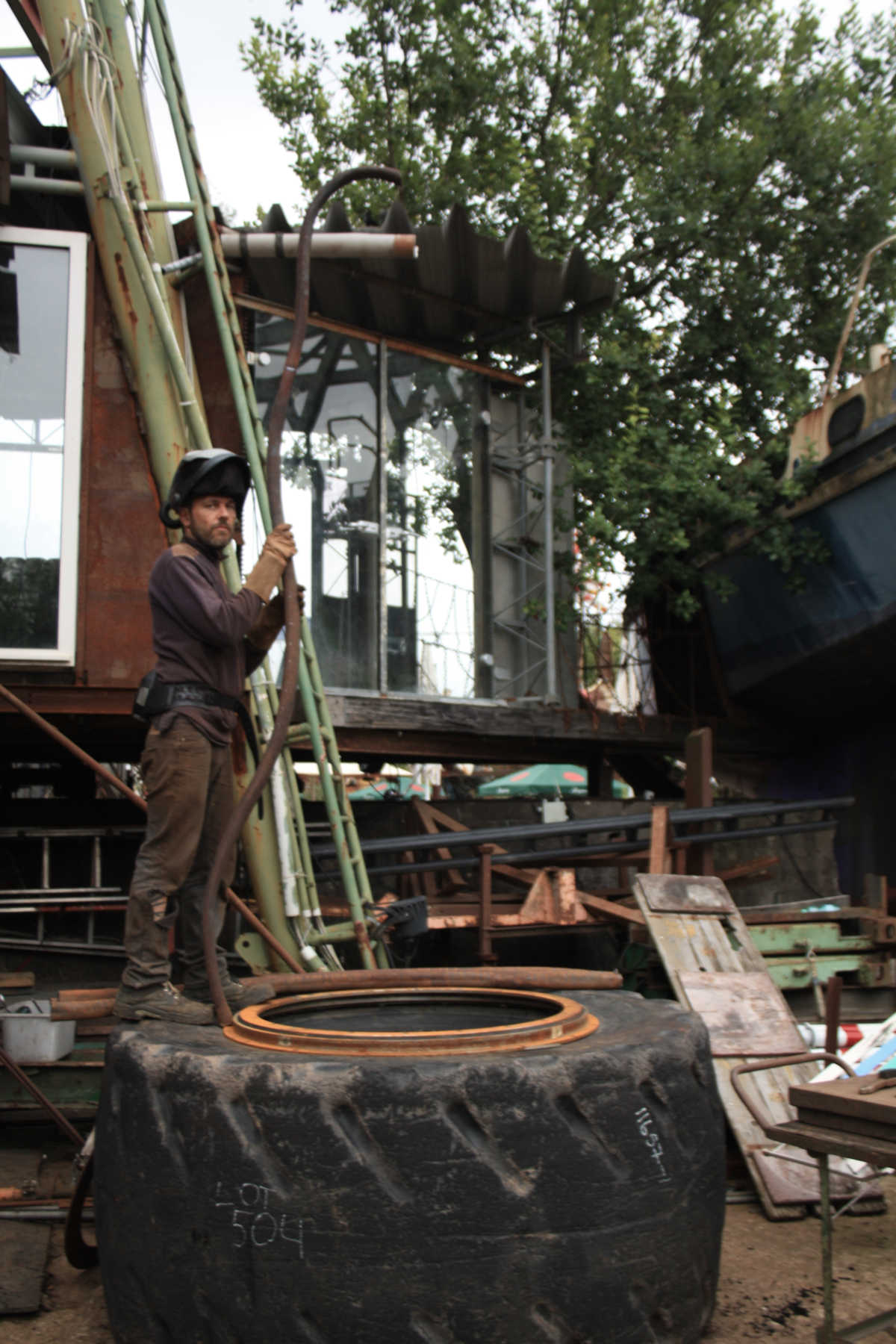
A solo workshop in Berlin – drawn, forged, welded and finished by hand. This page describes the practice, the materials, and the places the work lives in today.
- 01
Drawing
Every piece starts on paper. The first lines come after a site visit or a phone call – then they are checked against the measure of the room and the span of the architecture. There is no catalogue and no pre-set line: each work begins on a blank page.
- 02
Forging
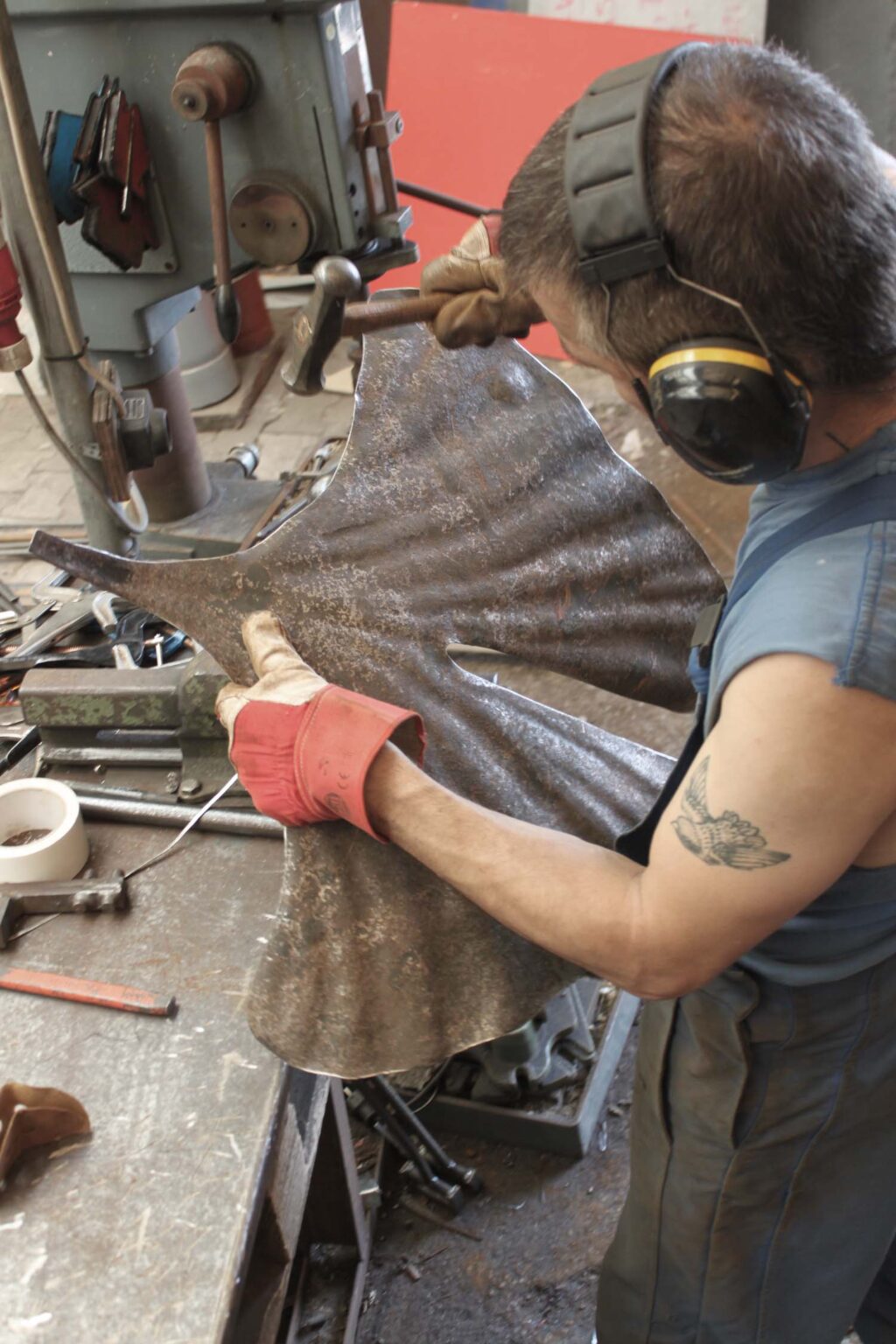
Steel is cold-bent, upset, and where needed hot-formed in the forge. Forging leaves visible marks of the hand that are not later ground away – that mark is part of the work. Square, round, flat, sheet: each profile has its own language.
- 03
Welding
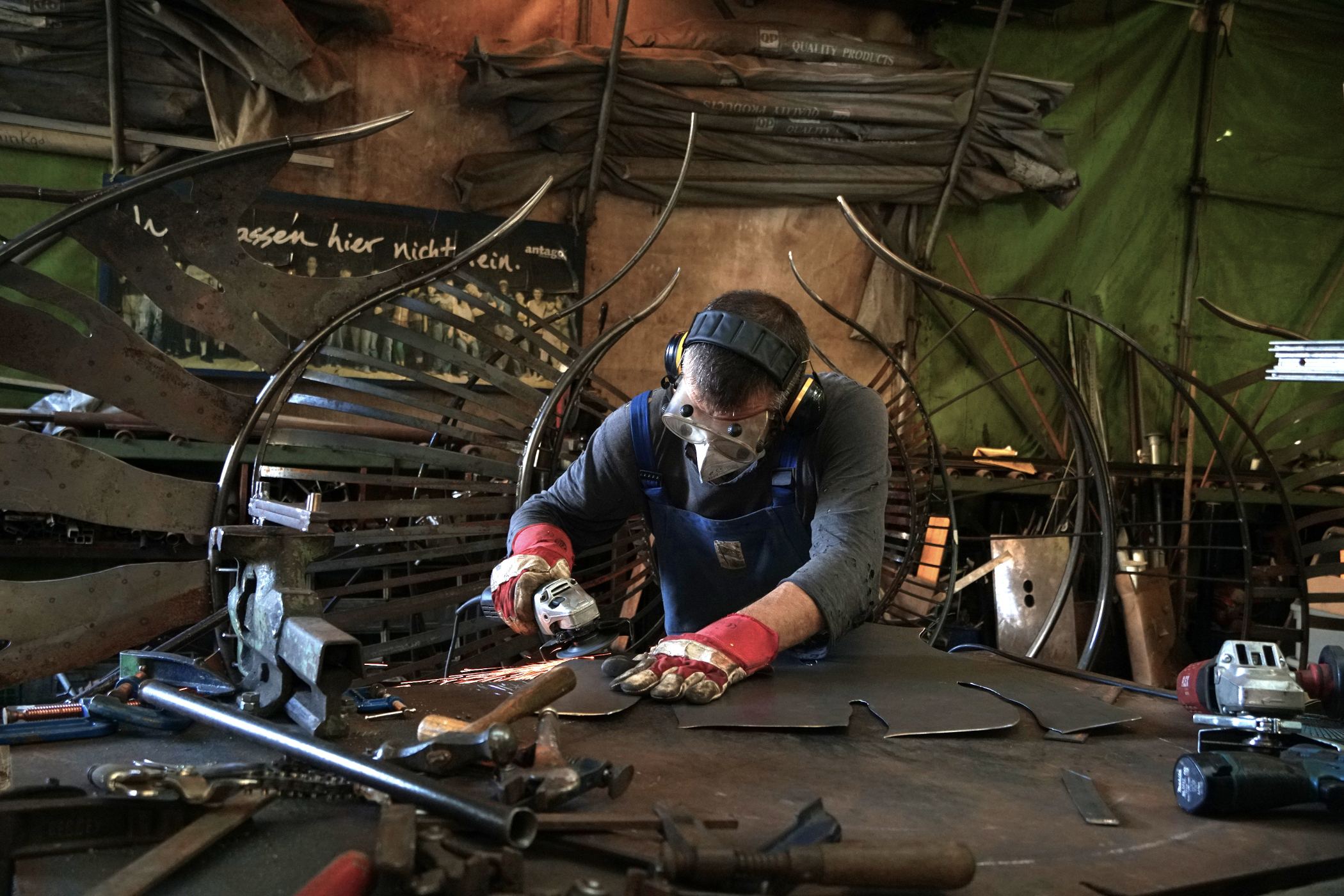
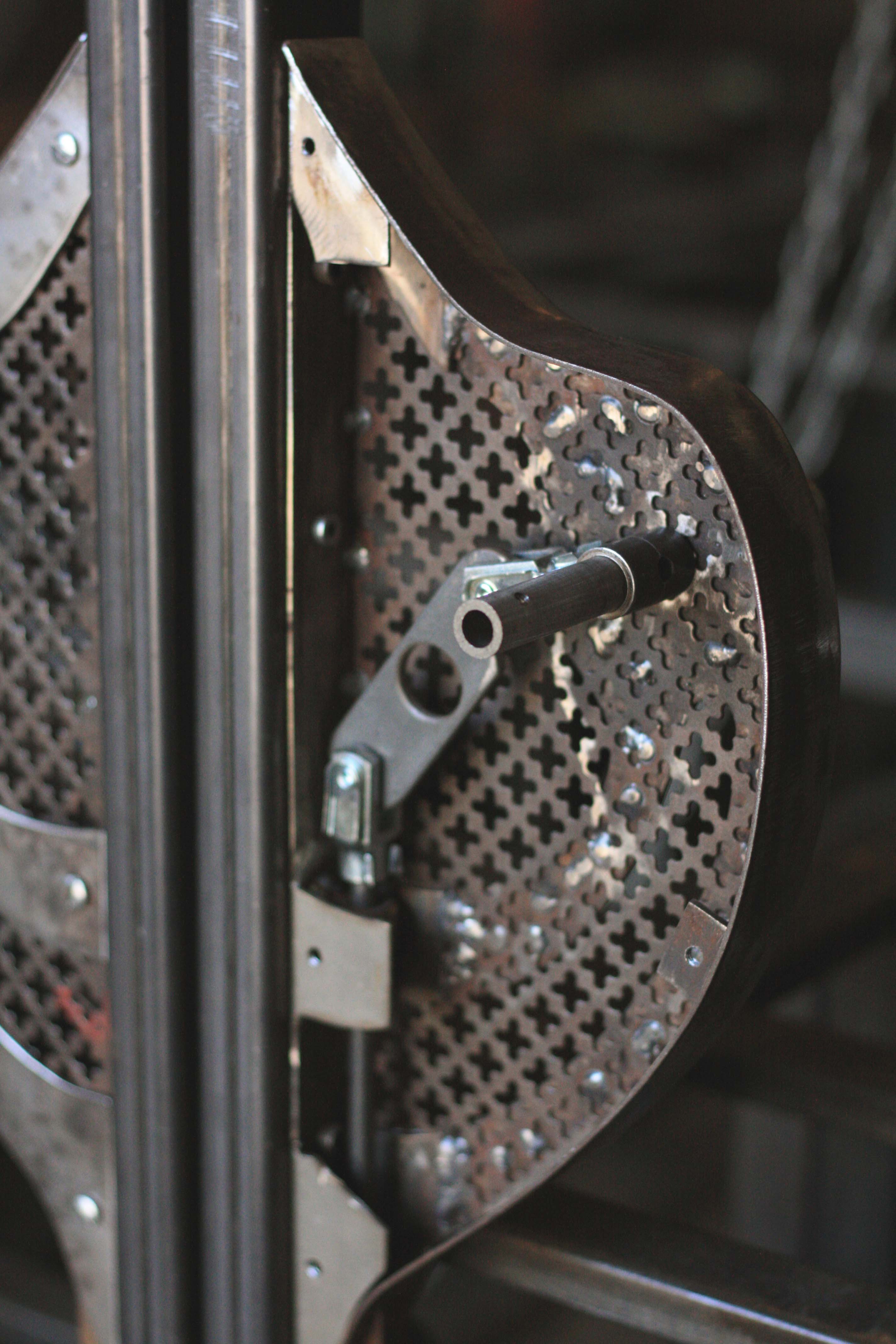
TIG and MIG welding depending on material and wall thickness. Welds are placed so they do not need to be covered – they carry the structure and belong in the image. Structural details are coordinated with the engineer of record where relevant.
- 04
Finishing
Finish is never a step at the end; it is a decision from the start. Hand-darkened oxide patina, brushed brass, lacquered copper, protected mill-scale steel, hardening beeswax: each solution is sampled, signed off and documented before the piece leaves the workshop.
Construction steel
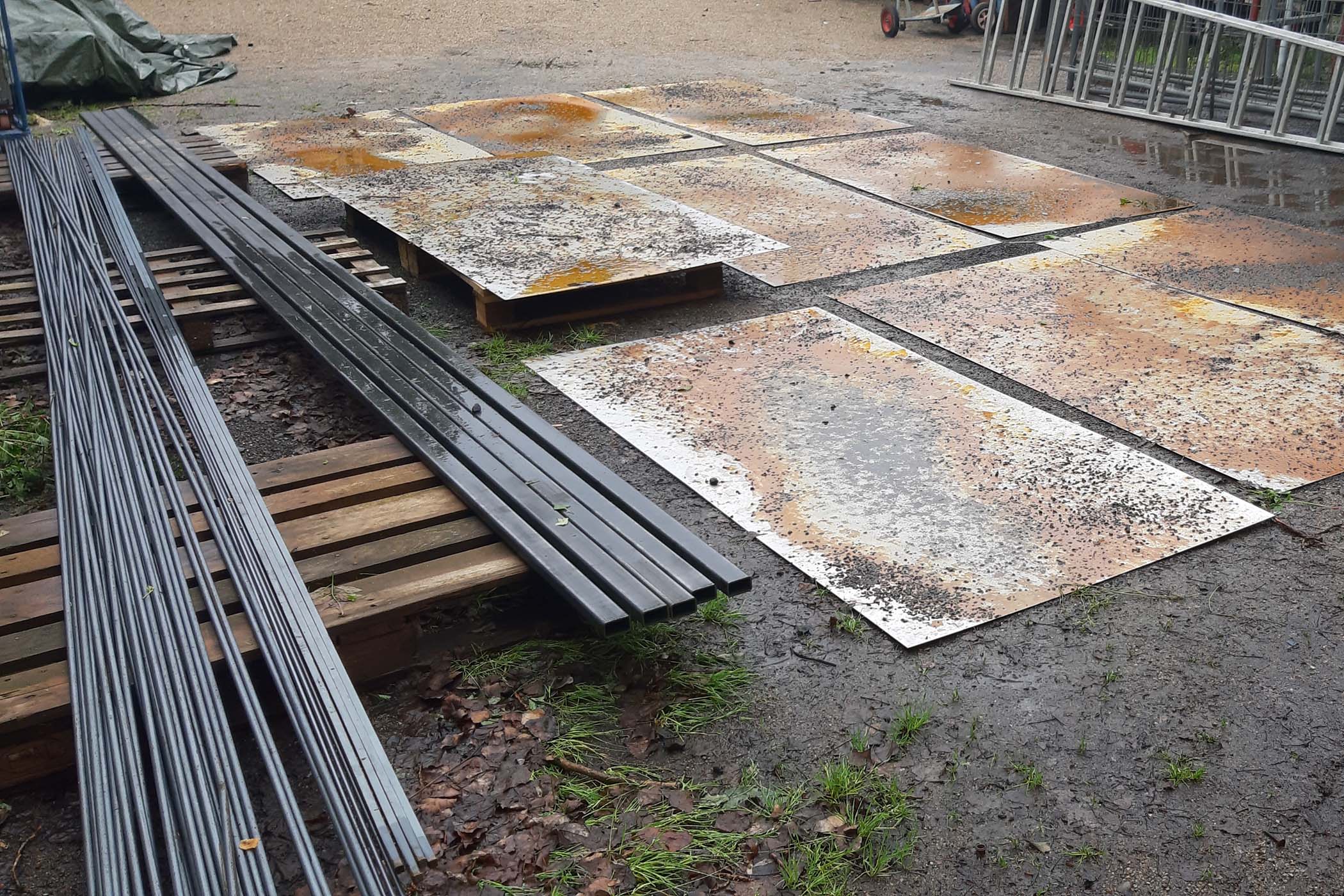
Square, round, flat, sheet – rolled, drawn, forged. The workshop's primary material.
Brass
Bars and sheets, brushed, lacquered or carried to a patina. Used for lighting, accents and hardware.
Copper
Sheets and profiles, oxidised or protected. A warm accent in the steel vocabulary.
Iron & wrought iron
For restorations and works with historical reference. Hot-formed in the forge.
Hardwoods
Ash, oak, beech, walnut – used as tops and connectors in furniture work.
Finish: oxide patina
Accelerated oxide, applied in layers, sealed with wax. Dark, alive, never flat black.
Finish: hardening wax
Hardening beeswax – the simplest, most honest protection for indoor steel.
Finish: bluing
Hot-blued steel – even, matte black for furniture and hardware.
- Protagon Performing Arts Frankfurt am Main 2022 – 2024
- Odonien – art space Cologne permanent exhibition
- Maison Mosaïque (DBA Architecture) Mogneneins (FR) 2023 – 2024
- Freqs Of Nature Festival Brandenburg 2018
- Zurück Zu Den Wurzeln Festival Brandenburg 2023
- Private residence Brandenburg 2025
Frequently asked about the workshop
Where is the workshop?
The workshop is in Berlin. Commissions are delivered across Europe – primarily Germany and France, with occasional projects in Belgium, the Netherlands and Switzerland.
Who is behind Byse?
A solo practice. Byse is the public name; civil name Jean Robert. The person who writes the quote is the person who draws, forges, welds and finishes. There is no offshore production.
What size of project do you take on?
From a single piece (side table, lighting fixture, sculpture under one metre) to a component twenty-five metres long. We keep concurrent projects small – three to four at a time – to protect quality and timeline.
Do you work from architect drawings or your own design?
Both. For architectural commissions we read the full CAD set and produce shop drawings on top. For sculpture and furniture we design from the brief – place, use, scale, material, then line.
What does a typical commission look like?
First exchange (call or email) → site visit if needed → brief and quote → drawing and sample sign-off → deposit → fabrication → delivery and installation → care sheet and closeout documentation.
Can I visit the workshop?
Yes, by appointment. A workshop visit can be useful when a larger commission is being considered or when material and finish decisions need to be made on real samples.
Carrying a project?
A short exchange is enough – place, use, rough budget, timeline.
Start a conversation